Case Study
Turning a PDF Catalog into a Controlled B2B Ordering Experience
Atlas Construction Specialties needed a better way for contractors to find products and place orders online, without replacing Sage 300, the system running their business. Built Mighty built a WooCommerce storefront synced to Sage, with customer- and jobsite-aware access, turning routine phone-and-PDF orders into self-serve online transactions.
Relationship Length
Technical partner since January 2024
Focus
Customer- and jobsite-aware ordering connected to Sage 300
- Sage 300 Web API Integration
- Customer and Jobsite Access
- PDF Catalog to Online Store

Focus
B2B ordering
- Custom WordPress Development
- Custom Plugin Development
- Data Visualization & Mapping
of estimated administrative work saved each week
Challenge
- A static PDF catalog and phone orders
- Prices agreed per customer contract
- Orders kept separate per jobsite
- Only part of the Sage catalog belongs online
Solution
- A searchable WooCommerce storefront
- Customer-specific catalogs and prices
- Jobsite selection when ordering
- A custom PHP integration with the Sage 300 Web API
- Scheduled syncs, with Sage as the source of truth
Result
- 1,642 products synced to WooCommerce
- An estimated 15+ admin hours saved each week
- No second system for the team to manage
Client Overview
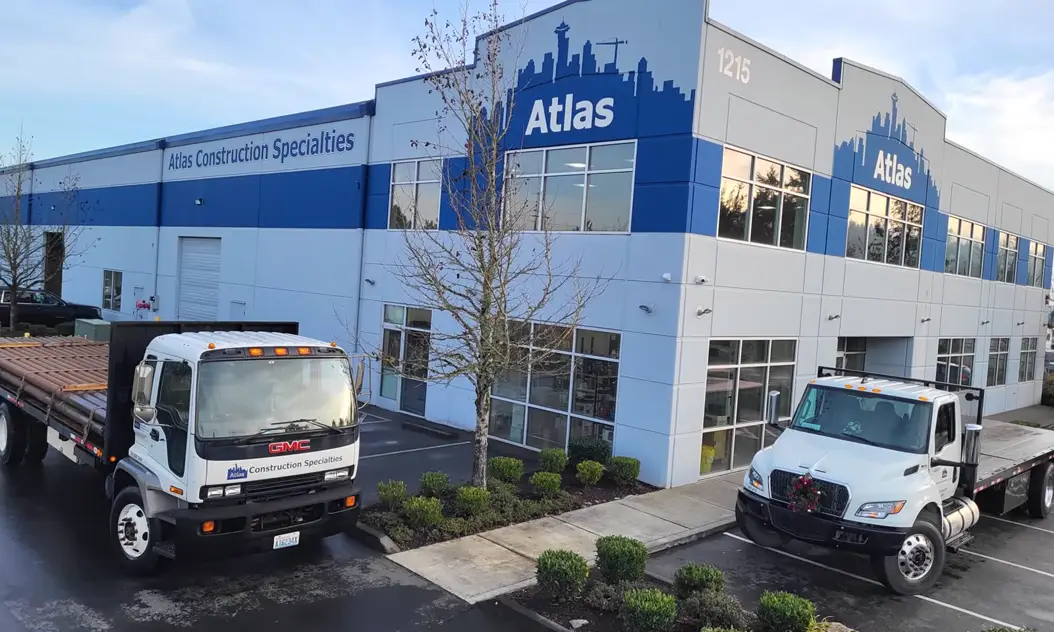
Atlas Construction Specialities supplies contractors and construction professionals across Washington from multiple warehouse locations. When Built Mighty started working with Atlas in January 2024, customers were still relying heavily on PDF catalogs and phone calls to find products and place orders.
Atlas already had Sage 300 handling the operational side of the business, including customers, products, jobsites, inventory, and orders. The goal was to give customers a better way to interact with that information through WooCommerce without replacing Sage as the source of truth.


The Challenge
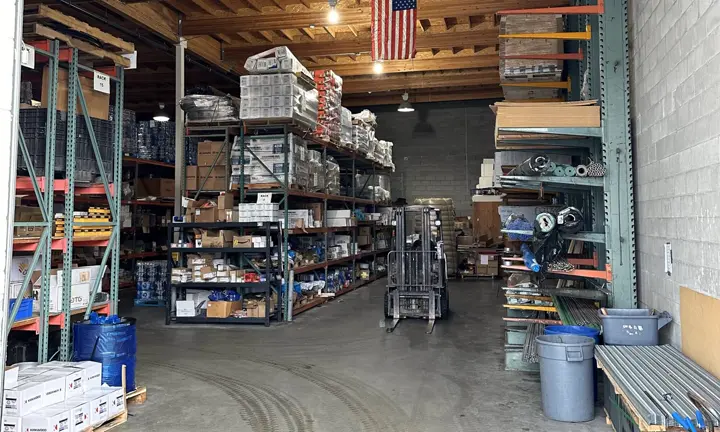
Atlas had thousands of products and customer relationships that did not fit a standard online store setup.
The old experience was largely a static PDF catalog. Customers could look through products, but finding the right information or placing an order often meant contacting the Atlas team directly.
Pricing made this more complicated. Atlas serves different customers and jobsites, and products and pricing can be restricted based on who the customer is and where the order is going. A standard public WooCommerce catalog could not handle those requirements on its own.
There was also a data problem. Atlas managed roughly 15,000 to 20,000 products overall in Sage 300, but only the products intended for the online experience needed to be available in WooCommerce. The two systems needed to stay connected without forcing the Atlas team to maintain the same information twice.

Our Approach
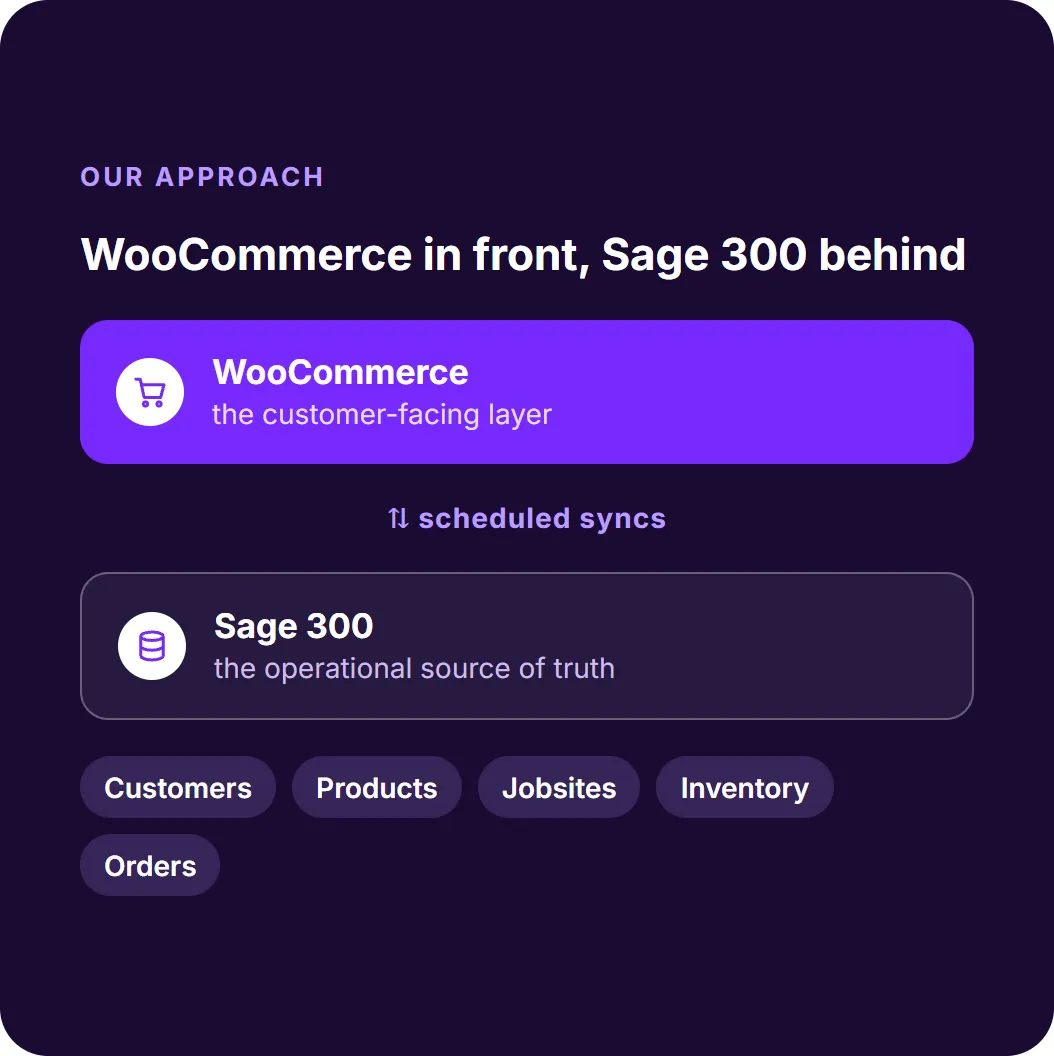
We treated WooCommerce as the customer-facing layer and kept Sage 300 as the operational source of truth.
Rather than asking Atlas to move its existing business processes into WooCommerce, we built the connection around the way Atlas already worked. The online store needed to know which products a customer could access, which jobsite they were ordering for, and what information needed to move back into Sage.
That meant the project was less about building a generic online catalog and more about creating a controlled B2B ordering experience on top of Atlas’s existing systems.
What We Built

From PDF Catalog to Interactive Store
We replaced the static catalog experience with a WooCommerce storefront where approved products could be searched and viewed online.
Instead of making customers call Atlas for every product question, the store gives them a place to find the information themselves and begin an order.
The online catalog currently includes 1,642 products continuously synced into WooCommerce, while Sage 300 continues to manage the broader product catalog.

Customer and Jobsite Access
Atlas needed more control than simply putting every product on a public website.
This went beyond tiered pricing. Atlas has individual pricing agreements with customers based on their contracts, so each customer can have their own catalog of products with prices agreed upon specifically for their account.
A single customer can have multiple jobsites, each tied to a different project and delivery location. It’s more than just having multiple addresses. Atlas needs to keep the orders, quantities, and totals for each project separate, even when they all come from the same customer account.
We built the WooCommerce experience to use this customer and jobsite information from Sage 300. Instead of contacting Atlas to confirm which products and prices apply to their account, customers can see that information directly in the online store, select the appropriate jobsite, and place their order.

Sage 300 Integration
We built a custom PHP integration using the Sage 300 Web API to connect WooCommerce with Atlas’s existing business system.
Product and customer information moves between the systems through scheduled processes, while Sage remains the source of truth. Orders placed through WooCommerce can also carry the customer, jobsite, quantity, and delivery information Atlas needs to continue processing them through its existing workflow.
That allowed Atlas to add online ordering without creating a second operational system for its team to manage.

How It Works

Measurable Impact
The biggest change was taking routine product and ordering activity out of the phone-and-PDF process.
Customers can now find the products and agreed-upon prices available to their account, choose the jobsite they are ordering for, and start an order online instead of having to contact Atlas each time they need product information or want to place an order. This gives customers a more direct way to begin an order as their project needs come up.
For Atlas, that change was estimated to save at least 15 hours of administrative work each week by reducing the amount of routine product and ordering requests handled manually by the team.
The bigger operational change is that Atlas can continue using Sage 300 for the information that runs the business while customers get a more direct way to find products and place orders online.
Built Mighty began working with Atlas
Products managed in Sage 300
Products continuously synced to WooCommerce
Estimated admin work saved each week
Key Takeaways
Atlas did not need to replace the system already running the business. It needed a better customer-facing layer that could work with it.
By connecting WooCommerce to Sage 300 and building customer- and jobsite-aware access, we turned a static product catalog into an online ordering experience while keeping Sage as the source of truth.
The result is a system that lets Atlas continue managing its products, customers, jobsites, inventory, and orders through the tools it already relies on, while giving customers a more direct way to find products and place orders online.
The important part was not simply putting thousands of products on a website. It was making those products available to the right customers, in the right context, without creating another system for Atlas to maintain.
Technologies
WordPress · WooCommerce · Sage 300 · Sage 300 Web API · Custom PHP integration

Ready to connect WooCommerce with your existing business systems?
Built Mighty helps B2B businesses layer customer-facing ecommerce on top of ERPs like Sage 300, without replacing the tools that run their operations.
Talk to a WooCommerce Expert
See If We’re the Right Team for You.
Talk to us